Boreal Songbird Initiative : Reports & Other Publications
SEARCH SITE 


Montreal Gazette

Deal expected to protect Quebec forests

Kimberly-Clark pledges to buy only sustainable wood fibres

Michelle Lalonde
August 6, 2009

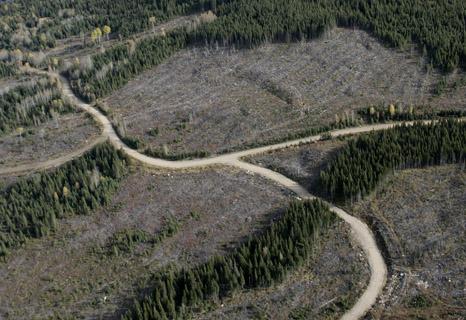
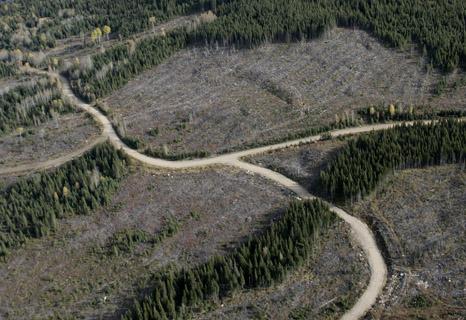
Logging operations in northern Quebec have left huge holes in the native Boreal forest. Most roadways and rivers have small strips of trees to shield the view of what lies behind.

Photo by Allen McInnis, Montreal Gazette

In what environmentalists are hailing as a "monumental" move in the right direction, the largest paper-tissue manufacturer in the world announced a new environmental policy yesterday that is expected to help protect Quebec\'s boreal forest from unsustainable logging practices.

Kimberly-Clark Corp., maker of Kleenex, Scott and Cottonelle brands, has pledged by 2012 to stop buying wood fibre from the Canadian boreal forest that is not certified by the Forest Stewardship Council.

At a joint news conference in Washington, D.C., yesterday, officials for Kimberly-Clark and the Greenpeace environmental group announced they were burying the hatchet. Greenpeace had waged a four-year public relations campaign it called "Kleercut," which urged companies, institutions and consumers not to buy Kimberly-Clark\'s products.

Greenpeace and other advocacy groups consider certification by the Forest Stewardship Council to be the most demanding environmental certification program for forest management. Canada\'s boreal forest, characterized by the predominance of coniferous trees, is the largest intact natural forest in North America.

"Regarding our use of fibre from the Canadian boreal forest, we, like Greenpeace, recognize these forests are of high conservation interest and these areas must be managed responsibly," said Suhas Apte, Kimberly-Clark vice-president (global marketing).

The company also pledged that by 2012, 40 per cent of the tissue fibres it purchases from North American sources will be recycled or FSC-certified. The firm purchased an estimated 400,000 tonnes of tissue fibres from Canadian sources in 2007.

"Because of how big Kimberly-Clark is, and how much pulp it purchases in Canada and around the world, this is going to shift the global forest industry toward much more sustainable forest management," said Richard Brooks, of Greenpeace Canada.

The change in policy at Kimberly-Clark could be good or bad for Quebec\'s forestry industry, Brooks said, depending on how fast the government, logging companies and pulp and paper mills green up their operations.

"Those doing the right thing will have a strengthened relationship with Kimberly-Clark," he said, adding the new policy will challenge competitors like Georgia-Pacific and Proctor & Gamble to adopt similar policies.

Also, logging firms like AbitibiBowater will have to step up efforts to get FSC certification if they want to sell pulp to Kimberly-Clark, Brooks said.

mlalonde@thegazette.canwest.com

Banner photo credit: Northern Images, by Wayne Sawchuck
Jennings Lake in northern BC


FAIR USE NOTICE:
This site contains copyrighted material the use of which has not always been specifically authorized by the copyright owner. We are making such material available in our efforts to advance understanding of issues of environmental and humanitarian significance. We believe this constitutes a 'fair use' of any such copyrighted material as provided for in section 107 of the US Copyright Law. In accordance with Title 17 U.S.C. Section 107, the material on this site is distributed without profit to those who have expressed a prior interest in receiving the included information for research and educational purposes. For more information go to: http://www.law.cornell.edu/uscode/17/107.shtml. If you wish to use copyrighted material from this site for purposes of your own that go beyond 'fair use', you must obtain permission from the copyright owner.


info@borealbirds.org | 206.956.9040 | Newsletter UnsubscribeCopyright © 2007 Boreal Songbird Initiative