Largest Intact Forest
Few places on Earth can still claim to be mostly untouched by the ever-expanding footprint of human development. The demand for resources and increasing global population has put countless wilderness areas around the world in jeopardy, with some being in danger of being lost forever.
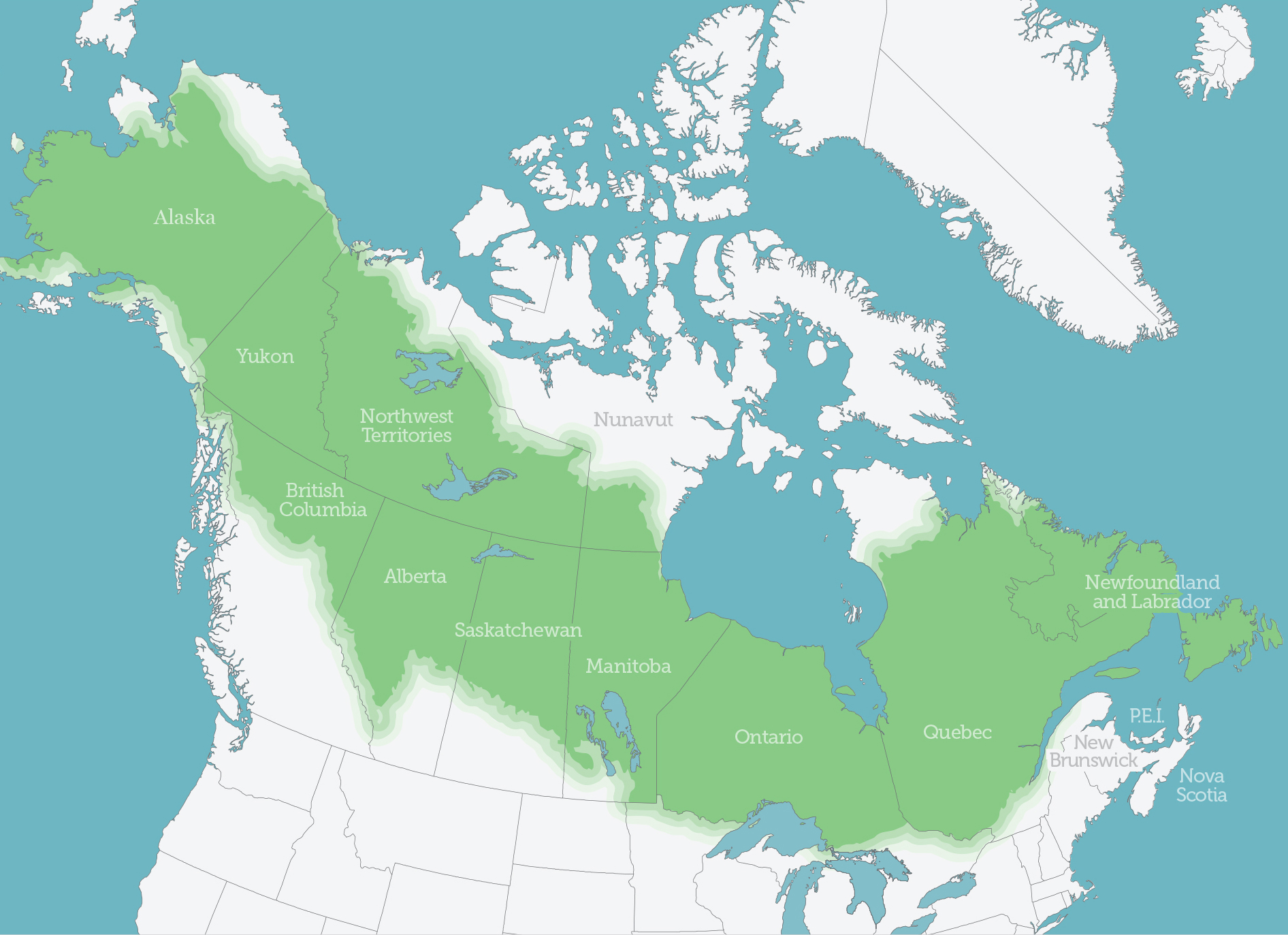
The North American Boreal Forest, however, offers a different story. At 1.5 billion acres—the majority still intact—the North American Boreal presents a truly unique opportunity to get it right. By conserving large portions of this great forest now before it's too late, we can shift the narrative and prove that maintaining the ecological integrity of large ecosystems is still possible.
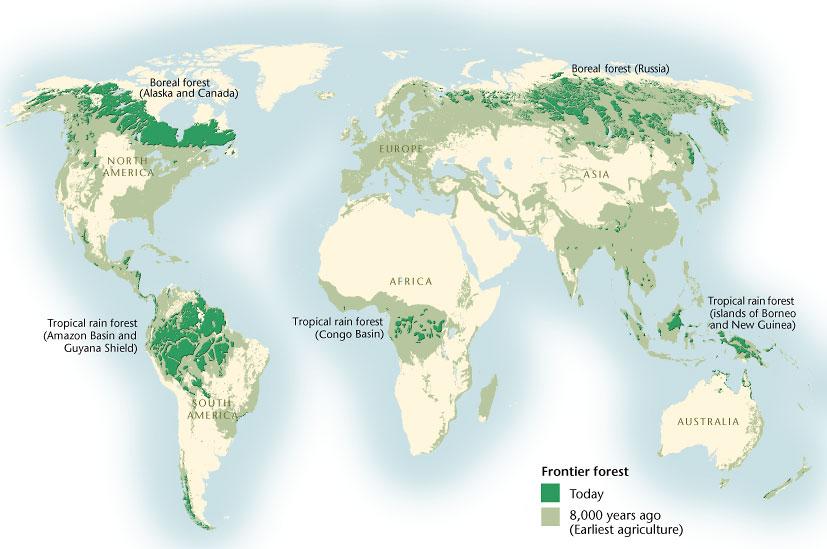
Only five large forest regions globally still contain large expanses of untouched forest, which have collectively been dubbed the 'Family of Five'.
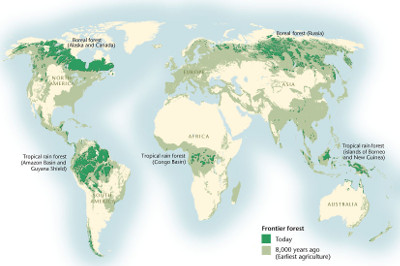
Family of Five
The North American Boreal Forest, which spans the northern part of the continent from Alaska to Newfoundland, is a member of the 'Family of Five'—the last remaining major global forests that still feature considerable expanses of untouched wilderness. It joins the Amazon, the Russian Boreal, the Congo Basin, and the tropical forests of Borneo and New Guinea. Representing 25% of the world's last remaining unspoiled forests, the North American Boreal is the largest intact forest remaining on Earth.
Canada claims the majority of the North American Boreal, however Alaska contains extensive expanses of boreal throughout the interior as well.
History of Stewardship
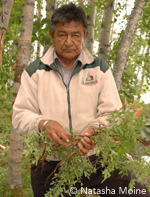
Today, Indigenous Peoples are at the forefront of boreal forest conservation and stewardship. More than 600 First Nation communities are located in Canada's boreal forest. In nearly every corner of the forest, Indigenous Peoples are leading the way in efforts to preserve the boreal that is integral to both their livelihoods and their culture.
Top Five Facts About the Boreal Forest
- INTACTNESS: The North American Boreal is the largest intact forest left on Earth, with around 1.2 billion acres still spared from modern industrial development. Science is increasingly pointing to the need to preserve the world's few large, untouched wilderness landscapes, of which the boreal forest presents one of the best opportunities to still get it right.
- BIRDS: North America's boreal forest acts as North America's bird nursery due to the enormous quantity of migratory birds that rely on it during summer breeding season. Each fall, 3-5 billion birds representing 325 species emerge out of the boreal forest headed for their wintering grounds, ranging from the United States all the way down to the southern tip of South America.
- WILDLIFE: Despite being lost from much of their historic range, North America's boreal forest offers a safe haven for many of North America's most iconic large mammals. From wolf, moose, and caribou to grizzly, black, and polar bears, a variety of beloved animals still roam freely in the wild throughout the numerous expanses of untouched forest in the boreal.
- CLIMATE: The boreal forest plays an enormous role in slowing the effects of climate change. It stores almost twice as much carbon as tropical forests, helping to slow the increasing buildup of carbon dioxide in our atmosphere. Canada's boreal forest alone stores the equivalent of more than 20 years worth of the world's emissions from the burning of fossil fuels.
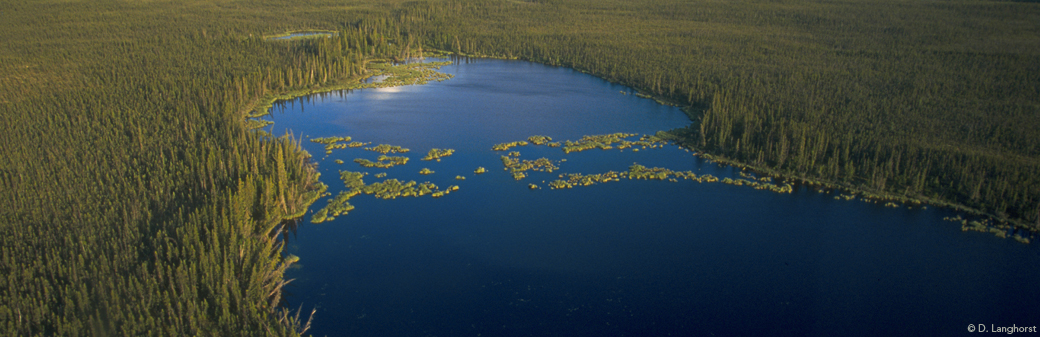
- WATER: Despite much of the world experiencing increasing shortages of clean fresh water, North America's boreal forest features millions of pristine and untouched lakes and rivers both small and large. In fact, the North American Boreal is the world's largest source of unfrozen fresh water on Earth.
A closer look at Canada's boreal forest
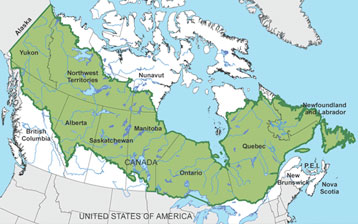
Explore Canada's boreal forest by province and territory »
The Global Boreal Forest
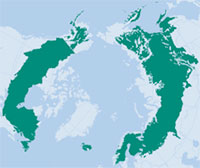
Named after Boreas, the Greek god of the North wind, the boreal forest circles the northern portion of the globe like an emerald halo and is found in Canada, Alaska, Scandinavia, and Russia.