Late last month the government of Peru announced that it would be protecting over 1 million acres of tropical Amazonian rainforest near the Brazilian border. The newly-formed Matsés National Reserve is named after the native Matsés people, who were only first contacted by the outside world in 1969. They have continued to live largely as they had for thousands of years but have been forced to fight against invaders trying to exploit oils, minerals, and trees. The creation of this reserve not only helps preserve their traditional ways of life, but comes as a huge boost to conservation efforts going on within the Amazon.
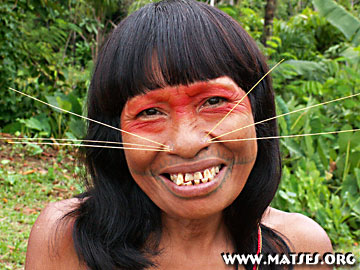
The Matsés are often referred to as the "cat people" due to their trademark whisker and facepaint decorations
From www.matses.org
The reserve supports an immense diversity of life including at least 416 bird species, 65 mammal species, and between 3,000-4,000 plant species. Boreal-breeding birds like the Swainson's Thrush, Gray-cheeked Thrush, Alder Flycatcher, Solitary Sandpiper, Greater Yellowlegs and Lesser Yellowlegs migrate through or spend their winters there. The Amazon is the sister to the Boreal in the Americas as one of the last 4-5 large intact forests left on Earth (the other three are the Russian Boreal, Congo Basin, and parts of Indonesia). But the Amazon is also a sister as a winter destination for many Boreal birds. Actions like this one in Peru to protect Boreal bird wintering grounds are the compliment to the new protections for Boreal bird breeding areas like the recent Nahanni expansion and the new national parks on Great Bear Lake in the Northwest Territories.
Thanks to the World Land Trust, Chicago Field Museum and CEDIA (Center for the Development of the Indigenous Amazonians) for their work to make this a reality!
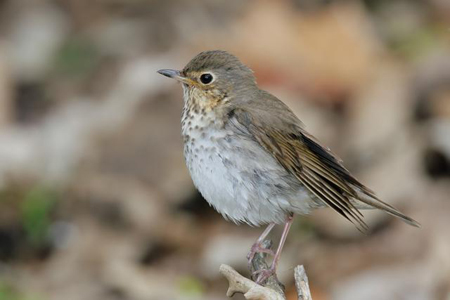
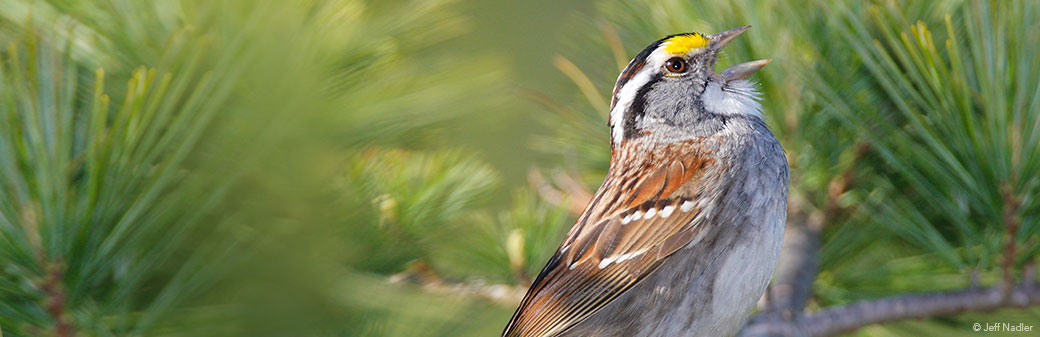
An appreciative Swainson's Thrush
Credit: Jeff Nadler